Showing posts with label Young Adult. Show all posts

6 July 2017

Book Review: Out of the Shadows by Emma Carrie

Exciting Start to Series

Teenager Emily Brelin’s adoptive mother has just died, and now Child Protective Services needs to find her a place to live. At least, that’s what they think. Emily needs to stay off the grid, to make sure her past doesn’t find her. That means staying out of the system.

Detective Victoria Tacket didn’t even know her friend Dr Jennifer Brelin was ill, let alone that she’d adopted a teenager. And why has Jen nominated her as guardian? She’s not fit to be a parent—which she tells CPS. But then Emily disappears, and Vick knows she has to find the missing teen.

Emily is a fascinating character, with more skills that people would expect for her age—including the ability to lip-read. She takes the lead in this game of hide and seek, and her willingness to run away and disappear introduce a lot of questions. Who is Emily? Why is it so important she stays out of the system? Who is looking for her … and what will happen if they find her?

This is the first book in a series—thank goodness, because I want to know what happens next! It doesn’t end on a cliffhanger, but the end definitely leaves some unanswered questions for future books. (Cliffhanger endings too often give me the impression the author didn’t know how to finish the book, which breaks the illusion that it’s real).

Out of the Shadows is a fast-paced read with plenty of suspense. The plot and writing are solid, and the characters are excellent. If there was a failing, it was that it was too quick to read (I read it in a single sitting, because I couldn’t put it down). Not a novel to start late in the evening …

Recommended for those looking for Young Adult suspense (and especially for those looking for Young Adult books with no romance).

Thanks to the author for providing a free ebook for review. You can find out more about Emma Carrie at her website, and you can read the introduction to Out of the Shadows below:


31 March 2016

Review: Replicate by Adele Jones

Thrilling YA Suspense Series


If you’re the kind of reader who doesn’t like endings that make you want to read the next book NOW, then you’ll want to wait until the final book in this trilogy releases later in 2016. And do read the series in order: Integrate, Replicate, Activate, because while each novel follows on from the previous one.

Replicate continues the story of eighteen-year-old Blaine Colton, beneficiary of Ramer’s Cure, which has cured his hereditary degenerative mitochondrial disease, but may itself be a death sentence. His childhood friend and potential girlfriend, Sophie, is now working in scientific research at the Institute that produced Blaine’s cure. But when Blaine finds embryos with his name on them at the Institute, it’s apparent that the unethical and sometimes illegal activities introduced in Integrate didn’t end there.

The plot is excellent—clever, tightly plotted, plenty of tension and suspense, all enhanced by the consistent fast pace that feels as though you’re living the chase in real time with Blaine. There are plenty of twists and turns, some more unexpected than others, and it kept me turning pages until the end. I will admit that I didn’t understand all the science, but that could have been because I was reading quickly, wanting to find out what happened and whether . . . no. That would be a spoiler.

The characters are also excellent, although there were a few times I got annoyed with Blaine or Sophie for doing or not doing something, or for making stupid decisions. Then I remembered they’re teenagers, and logic isn’t high on their list of attributes. Yes, for fictional teenagers in an unreal situation, their behavior was all too real.

All in all, an excellent YA suspense novel. Recommended. You can find out more about Adele Jones and the Integrate series at her website ( www.adelejonesauthor.com), or you can read a sample here:


Thanks to Rhiza Press for providing a free book for review.

24 April 2015

Review: Soaring Through Stars by Rajdeep Paulus

Wow. Just Wow. 


Soaring Through Stars is the final book in a trilogy, following Swimming Through Clouds and Seeing Through Stones, and you really do need to read all three books in order. In fact, even giving an accurate book description will effectively give a spoiler for the first two books … but I’ll try.

The trilogy is the story of Talia and Jesse Vanderbilt, daughter and son of famous Chicago lawyer Gerard Vanderbilt … the man who killed their mother through control, abuse and neglect, and now controls his children through fear and pain. But Talia has a secret—Lagan, a boy at school who has befriended her. Her first friend. That’s the first book.

Even from the first book I could see there was a sinister side to Gerard, and while there are further hints in Swimming Through Clouds, it is here that we finally find out more about Gerard and what a piece of work he really is. But the really scary thing is how the years of abuse affect his children—it’s like they’ve been programmed, and they have to fight to break free of that programming and pursue what they believe in. This control illustrates why so many abused women don’t or won’t leave their partners, and that is frightening. It’s especially frightening to think that some women escape but are sent back to their abusers by well-meaning but deceived officials.

This isn’t a fun book, a light romance to download for your summer holiday (if that’s what you’re after, try Beth Vogt, Denise Hunter or Becky Wade). Rajdeep Paulus is more like Ginny Yttrup or Nancy Rue and Rebecca St James, in that she’s not shying away from the difficult topics, yet without being explicit or gratuitous. It’s well-written, sobering, and with subtle Christian undertones. Excellent.

Thanks to the author for providing a free ebook for review.

8 April 2015

Review: Loathing Lola by William Kostakis

2015 Reviewing Challenge: Book by an author under 30


This Challenge was harder than I thought—most Christian fiction seems to be written by older authors (it’s a big clue that they are over 30 when their bio says they are a grandmother). No one actually comes out and says their age. Anyway, I was pleased to find Australian author Will Kostakis come up on my blog feed, because as well as making some interesting points about male authors, he also was under 30. Off to Amazon, where I picked up his debut novel, Loathing Lola, published when he was just 19.

It’s not Christian fiction, which means there is a little swearing and a cast of characters who don’t have any Christian beliefs (even though they all attend a ‘Christian’ high school). The one obviously Christian character, the school priest, was portrayed well—if only all general market fiction could write such positive Christian characters without getting cliché or preachy.

Fifteen-year-old Australian schoolgirl Courtney Marlow has auditioned for Real Teens, a new reality TV show looking to highlight the life of a real teenager. Applying wasn’t her idea, but she’s been chosen and a chance discovery means she has to go through with it. But no sooner is the show announced than everyone wants to get in on it, from her second-best friend to her father’s new wife and the President of the school Mothers’ Auxiliary (their equivalent of the PTA).

Loathing Lola is written entirely in the first person, from Courtney’s point of view, and she has a clear and convincing voice—it’s easy to believe she is an average Australian teenager (the accuracy of the voice is a little disturbing when I remembered this was written by an Australian teenage male). She’s smart, funny, sad, depressing, angry—in other words, real. Well, she feels real. Unlike the TV show, which we find out is nothing real at all.

I enjoyed Loathing Lola. There was a strong author voice, a cast of quirky and interesting characters (I can’t say they were all likeable, but that was the point), a well-constructed plot and a theme that will appeal to a generation fixated on reality TV. And a great end.


26 December 2014

Review: Heaven Sent by Amanda Bews

A Book of Two Halves


Heaven Sent is a contemporary young adult novel set in Australia and New Zealand. While it had some real strengths, there were also some weaknesses, and these outweighed the strengths, at least for the first half of the novel. The second half was better—but I almost didn’t get that far.

The back cover blurb talks about “one drunken mistake”, a “disappearing boyfriend” and Heaven being “sent to New Zealand to ‘protect’ her father’s reputation”. On that basis, seemed pretty obvious what the “mistake” was, and just left the reader wanting it to happen already, so we could move on with the plot. Well, it took forever. The first quarter of the book was Heaven persuading the reader that she really wasn’t interested in sex. Almost eighty pages, and it could have been covered in ten. Then more introspection while Heaven realises what’s happened and fesses up to the parents (who are having their own relationship issues). All in all, we’re up to page 144 out of 279 before Heaven even sets foot in New Zealand.

It wouldn’t have been so bad if the writing in this first half was good, but it wasn’t. It was slow and repetitive, with too much thinking and not enough action. The entire book is written in first person point of view from seventeen-year-old Heaven’s viewpoint, which perhaps explains the endless navel-gazing, but doesn’t excuse it.

But the really distracting thing was the editing. It seems the author and editors (yes, one editor and two copyeditors are credited) are allergic to the word “said”. No one says anything. They scowl, spit, yell, hurl, pipe up … and that’s just in the first chapter. It gets worse, with the addition of unnecessary adverbs, excessive punctuation (because it adds excitement, perhaps?!), and a minor character who starts as Ted and becomes Tom. On the plus side, the interior formatting was excellent and I liked the cover.

The pace in the second half was much better, and meant it was easier to skip over the writing issues (which were still there). The main problem in this second half was everything moved too fast. I don’t want to give spoilers so let’s just say this is Christian fiction (specifically, Seventh Day Adventist fiction), and 130 pages wasn’t long enough to make the inevitable progression in Heaven’s character arc credible. Sweet, yes, but not believable.

Overall, I give Heaven Sent one star for the first half and four for the second. Recommended for teenagers looking for issues-based Christian fiction, for fans of authors such as Elaine Fraser and Michelle Dennis Evans.

13 October 2014

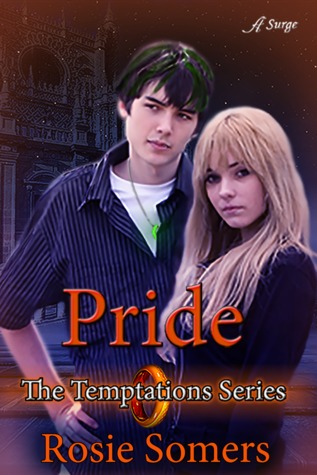
Book Review: Pride by Rosie Somers

22365515.jpg

Seventeen-year-old Gabriella Pierce is used to taking care of herself, but she’s about to become responsible for a whole lot more. When she gets a visit from three men claiming to be defenders of fantastical rings imbued with the powers of THE CARDINAL SINS, her life is changed irrevocably.

Gabby is the steward of PRIDE.

To make matters worse, she’s falling hard for fellow steward, Grant Barnett, and he hates her guts. Now Gabby has to learn to protect Pride without letting her feelings for Grant get in the way.


Release Date: September 9, 2014


My Review:

Gabriella Pierce thought life was tough trying to evade a lecherous foster father, but things are about to get worse: she’s the female steward of Pride, one of the seven deadly sins, and the forces of evil are out to get her and the other stewards. Although they are all supposedly safe inside The Sanctuary, their secret underground home, certain events suggest they have a traitor in their midst …

Pride is aimed at the YA market, and is the first in a planned series (presumably one for each of the seven deadly sins). It incorporates elements of other well-known YA series such as Harry Potter and Divergent, (an orphan who is the ‘chosen one’ fighting the forces of evil). It has that fast pace and addictive quality which makes it hard to put down.

While elements of the plot are similar to those of other popular YA series, the seven sins idea is unique, and provides an underlying Christian theme to the battle between good and evil. Having said that, the plot isn’t overtly Christian, no more so than the Divergent series. There were some minor writing issues (e.g point of view shifts and run-on sentences), but nothing that detracted from the story—which indicates how compelling I found it.

The one possible fault was the characters: the fast pace of the plot and the (relatively) large number of characters meant there wasn’t a lot of time devoted to the development of individual characters. However, as I’ve mentioned, it is the first novel in the series, and I would expect that now we’ve been introduced to the concept of the sins and the stewards, future books will be able to show more in the way of character development.

Thanks to Aniah Press for providing a free ebook for review.


Book Links:


Author Bio:

Rosie Somers is a YA author who lives in Florida, soaking up the year round sunshine. She can often be found in her favourite spot on her favourite beach, nose-deep in a good book. You can Rosie at her website, on Twitter, or on Facebook.

12 September 2014

Review: Love, Justice by Elaine Fraser

Warning: Biased Review Ahead ...


I provided Elaine Fraser with manuscript assessment and copyediting services for Love, Justice (via my freelance editing business), so there is a degree to which this review might be biased. Or maybe I liked Love, Justice because I could relate to Justice, who seems to have more courage to stand up for herself than I ever did at her age!

Justice is seventeen, and finds most of the teens at school are shallow and more concerned about finding the right dress for the Graduation Ball than thinking about others. She’s got bigger dreams than her schoolmates, dreams to make a difference in an unjust world. When she meets Seth at a peace rally, she is inspired to be just like him, travelling the world and making a difference. But she soon finds there are opportunities to make a difference right at home … especially when her father springs a bombshell on the family.

I very much enjoyed Love, Justice . It’s written in a chatty voice which makes it an easy read, and easy to get involved in Justice’s life. Justice is a likeable character who is on a personal journey to find a way she can make a difference in her life, asking questions typical for this age group. (It doesn’t seem that long since I was a searching young idealist myself, yet now I have my own teenage daughter).

In many ways, Justice has gone out of her way to make sure she doesn’t fit in with her schoolmates, with her “unstylish” hair and Doc Martens. But as the story progresses she realises that she’s judged the “cool” kids (especially Perfect Mercy) based on the way they look as well, and she gradually learns that it’s what’s inside that counts.

While Love, Justice has definite Christian themes, I believe it’s a novel that any teen searching for their identity will enjoy. Love, Justice is the sequel to Perfect Mercy, but can easily be read as a standalone novel. You can find out more about Elaine Fraser at her website.


26 August 2014

Review: Integrate by Adele Jones

Fast-paced YA Suspense with a GMO twist


Blaine Colton isn’t the average seventeen-year-old boy. He spent the first fourteen years of his life in a wheelchair until Professor Ramer’s experimental gene therapy turned him into a normal Australian teen. But now he’s back at the Advance Research Institute, under the care of Dr Melissa Hartfield, and something’s not quite right …

Blaine isn’t sure what’s happening, but he knows he needs to escape the Institute, and keep out of the clutches of Dr Hartfield and her cronies. And he needs to get more pills, so he seeks help from his former next-door neighbour, Sophie Faraday. But Dr Hartfield has already contacted Sophie, who now doesn’t know who’s telling the truth: Blaine, or the doctor?

Integrate is a fast-paced psychological thriller set in Brisbane, Australia. The plot is excellent, with enough science to keep it interesting, but not so much that it dissolves into technobabble. I liked the way all the little bits tied up at the end, yet still leaves room for a sequel (I’d like to see more of Blaine, Sophie and Jett).

Blaine is mature for his age, having come through the disabilities he faced in childhood with a strong sense of self, and no desire to return to the person he used to be. He’s fighting for his life in a different way, and has to persuade Sophie and others that he’s not violent or deranged—a difficult task when he’s only partway through his cure and his physical health is failing.

The other characters are good as well. They all feel like real people, with a mixture of good and bad points. They make mistakes, judge things incorrectly, and get frustrating. Annoying, but just like real people in real life. All in all, Integrate is a good read. Recommended.

Thanks to Rhiza Press for providing a free ebook for review. You can find out more about Adele Jones at her website, or by reading our interview.

13 June 2014

Review: Hacker by Ted Dekker

Outstanding YA Sci-fi


Nyah is seventeen, brilliant, and has lost everything. Her father and brother died in a car accident which left her mother brain damaged. She’s been accepted into a medical trial which is going to cost $250,000—money she doesn’t have. She has a plan, but is left running for her life after it goes horribly wrong.

Nyah teams up with Austin, the only person she’s ever met who is smarter than her. Austin’s dying of a brain tumour, but he’s got a plan … which is a cross between Fringe and The Matrix. He’s trying to find a mysterious person known as the Outlaw, as Austin believes the Outlaw will be able to heal him. In order to find the Outlaw, Austin is hacking into the most complex computer on the planet: his own brain.

The plot is fast-paced as the danger grows ever closer to Nyah. The characters are excellent and the writing outstanding. Dekker is one of the few authors I’ve read who have managed to pull off the combination of first person and third person point of view (first person from Nyah, third person from Austin and other characters). It shouldn’t work, because it’s a technique that reminds us we are *only* reading a book. It shouldn’t work, but it did.

This is only the second Ted Dekker book I’ve read. I like suspense, especially romantic suspense, but the previous Dekker I read (Three) was so full of psychological suspense I didn’t think I could put myself through that again (the only other book that’s come close was Abomination by Colleen Coble). Anyway, while Hacker was full of suspense, it was a mixture of physical and psychological, and I was better able to cope with that (although there was one scene where I closed my eyes. I don't like drills). I still don’t know if I’m brave enough to read Dekker’s older books, but I certainly enjoyed this one.

Hacker is the fourth book in The Outlaw Chronicles, but is easily enjoyed as a standalone novel. I wouldn’t call it Christian fiction—Dekker’s presentation of life and death in Hacker seems to only allow for a pleasant afterlife. Despite this possible drawback, it’s excellent YA science fiction, recommended for teens who enjoyed tech-based Sci-fi.

Thanks to Worthy for providing a free ebook for review. You can find out more about Ted Dekker at his website.

29 April 2014

Review: The Reign by Lynne Stringer

Gripping Finale


The Reign is the third and final book in the Verindon Trilogy, and it is best to read The Heir and The Crown first. In fact, if you haven’t read the first two and want to, you might be better going to my previous reviews to avoid spoilers.

Review: The Heir
Review: The Crown

All three stories follow Sarah, a teenage American girl who finds out she’s actually the heir to the throne on a far-off planet, and her best friend and teenage crush are actually aliens from her home planet, sent to Earth to guard and protect her (The Heir). Upon arriving on Verindon, she finds her life threatened by unknown forces, and learns she is required to marry but forbidden by law to marry the man she loves (The Crown).

The Reign begins with Sarah finally deciding which of her approved suitors she will marry, as her efforts to change the law have failed. Another attack on her life reveals information that will change everything—and place her in even more danger.

I’ve really enjoyed this debut YA series by Lynne Stringer. It’s not Christian fiction, but it is written from a Christian world view, so it doesn’t have any of the sex, violence or negativity so prevalent in contemporary YA fiction. The Reign pulls together all the plot points of the earlier books, and delivers a satisfying finale.

The books are all written from Sarah’s point of view, which has plusses and minuses. It was a strength in The Heir, because it meant the reader discovered the secrets of Sarah’s past as she did. I would have liked to have seen some alternate points of view in The Crown and especially The Reign, because both have strong male characters, and I would have liked to know what they were thinking!

Overall, I’ve really enjoyed this series and recommend it to fans of YA sci-fi.


Thanks to Wombat Books for providing a free book for review. You can find out more about Lynne Stringer at her website, or check out yesterday's interview

14 April 2014

Author Interview: Rajdeep Paulus

Today I'd like to welcome Rajdeep Paulus, author of Swimming Through Clouds (which I recently reviewed) and the sequel, Seeing Through Stones.

Welcome, Rajdeep! First, please you tell us a little about yourself. Where are you from?

Sure. I was born in North India, but celebrated my third birthday in NYC. Then my family moved to Canada, where I grew up until right before senior year in High School. Finished high school in Livonia, Michigan, studied English Lit at Northwestern near Chicago and met my husband there. Followed him to the Caribbean as he started Med School and that’s the reason we ended up in New York thirteen years ago. I spent close to a decade doing the full-time Mom thing, with a short break as a teaching assistant and now I’m finally doing what I always dreamed of: writing!

It has been said that authors should write the kind of book they like to read. What is your favourite genre? Who are your favourite authors?

Funny you mention this, because I am a huge Teen Fiction fan. I loved Hunger Games and Twilight and the Matched series. I also loved the books, The Book Thief and anything by John Green. But my all time favourite book is not Young Adult. A Thousand Splendid Suns is the book that changed my life as an aspiring writer. From the moment I turned the last page, I set out a goal to affect readers the way that book effected me. With an aftertaste of hope, if that makes sense.

Having read Swimming Through Clouds, that "aftertaste of hope" absolutely makes sense. 

What kind of books do you write? Where and when are they set?

I write contemporary Young Adult fiction, set in present day, and my first two books are set in and around Chicago. But ultimately, my goal as a writer is to write stories that stretch readers between two extreme emotional ends. And as they read my characters’ journeys, perhaps we can all learn a little about how to navigate the waters of the madness of this life. One minute amazingly sweet and the next a tragedy beyond our wildest imaginations. I’ve heard so many real life stories in the last decade that just break my heart, I know my stories barely scratch the surface of what’s going on out there, but I try to introduce some tough problems into my characters’ worlds and then advocate the power of kindness and hope of unconditional love.

Tell us about your latest book, Seeing Through Stones. Who will enjoy it? 

Sure. Seeing Through Stones continues the journeys of Talia and Jesse, this time telling the story from duel points of view, giving readers a chance to get to know the brother’s journey when the two go their separate ways. I think teens and women in general will fall in love with this story because of the unique cast that **SPOILER ALERT** shows up in the shelter where Talia checks into at the end of Swimming Through Clouds and in Jesse’s life as he searches for justice and purpose.

What was your motivation for writing Swimming Through Clouds and the sequel?

Simply put, I want to write great stories. Stories that give readers a whirlwind experience, break their hearts and fall in love. I also want readers to consider the madness of this life and how we are not in it alone. To perhaps find a Talia or Jesse in their own lives that is quietly suffering and extend a hand of kindness. And widen teen readers’ scope of understanding the world around them. Because a lot goes on in the lives of those around us. We just don’t see it, so we don’t bother worrying or wondering about it. In a country where it’s discouraged to get involved in others’ lives, I want to challenge readers to go against the norm and love someone that is easy to walk by and ignore. Everyone needs love. And everyone can use a little kindness. Everyone.

Where did the characters and story come from? What were your influences?

Truthfully, my imagination. And certainly there are seeds that start with various people I’ve come across in life. Certainly the physical description of Lagan is not too different from how my hubby looked when we first met some seventeen years ago, but I assure you, he never pursued me with Post-its. But he did send me a bunch of cassette tapes. Ha. What are those, you ask?? He was a deejay for his campus radio station and occasionally dedicated a song to me, would tape it, and send it me. And Talia, other than her taste in green clothes (which is my BFF’s favourite color,) her physical description, tastes and story are just a work of my crazy and overactive imagination.

Who is your favourite character and why? Do you have anything in common with him/her? 

Wow. Great question. I would have to say, and this might not make sense, but Rani, Lagan’s cousin. Only because she helped me to find Talia’s story. I wrote an entire book from Rani’s perspective before I ever penned one line of Swimming Through Clouds, so in some ways she was my first Fictional Love.

And there’s nothing like a first. Physical description and quirks of Rani (that barely come out in Swimming Through Clouds) were all me, although her story is not mine in any way, but in that first manuscript she was a freshman at Northwestern with long black hair, an addiction to chocolate and always misplaced things. That is me.

What are you working on at the moment? What other books do you plan to write?

Well, the truth I’m currently working on getting the word out about these first two books. Guest blogging, sharing interviews, and trying to enjoy the chatter about these first stories. I do have two books that are partially written or in first draft states, and I will get to those soon. I am also beginning a new blog this summer to document my hubby and his buddies who plan to bike form Seattle to NYC in the summer of 2015 to raise awareness and funds to combat childhood poverty and human trafficking. They’re calling themselves C4C Cycling 4 Change 2015. Best part about the new blog: I will be writing it with my thirteen year old daughter who is an aspiring author, so it will be a fun mommy-daughter venture. I hope.

Seattle to New York is a loooongg way! That's a huge undertaking, both in the planning and the execution. Kind of like writing a book, perhaps ...

You are a Christian but write books aimed at the general market. What made you choose this rather than the Christian market?

In a nutshell, I want to reach a wider audience. I did not grow up going to church and I guess I see myself more as a bridge builder, hoping to give readers questions to think about but not necessarily all the answers, if that makes sense.

Do your novels have an overt faith element? 

I think inevitably an author’s world view will slip into the story through the characters to some degree. So the faith element is part of Talia’s journey, but I don’t know that I have to take her “all the way,” if you know what I mean.

How does your faith influence your writing? How would that be different if you were writing for the Christian market?

I think my faith drives me to write generally clean fiction, in terms of sexual or profanity content, but more importantly, I feel drawn to write stories of hope, the source of hope not just human relationships. I haven’t read a whole lot of Christian fiction, so I suppose the overt use of church or the name of Jesus might not show up in my writing, but I don’t think that diminishes the power of the stories. If anything, I’m hoping that the story invites all types of readers, regardless of your faith background.

What do you see as the main differences between fiction written for the Christian market compared with the general market? 

Not sure to be honest. I love what Allen Arnold said at my first writing conference: He basically encouraged us to write the most compelling story we could. Make the story king. The message comes second. In fact, as a writer, any hopes to share any kind of idea will never happen if the idea isn’t packaged in a great story. I always sign my letters, Sincerely aware that great stories change lives. They’ve changed mine. As a writer, it’s my turn to change others. For the better. Of course.

For all the above questions, have a look at the recent blog post I wrote for CFOM (Christian Fiction Online Magazine.) I think it tackles the heart of these questions and will give readers a sense of how Playlist Fiction came about and what our hopes and vision have been for reaching teen and YA Fiction readers.

Here's the Book Trailer of the sequel, Seeing Through Stones:


Thanks for joining us today, Rajdeep. It's great to hear some more behind the story.

You can connect with Rajdeep on Facebook, Twitter, or her blog.

25 March 2014

Review: Swimming Through Clouds by Rajdeep Paulus

Edgy YA Contemporary Fiction


Talia Grace Vanderbilt is the strange girl at school, the one all the lids call ‘emo’. She’s not. She’s just hiding a home life where her every move is controlled by her father, immigration lawyer Gerard Vanderbilt, and where there consequences for not meeting expectations. She is responsible for caring for her younger brother, Jesse, as their mother is dead.

The whole book is written in first person, from Talia’s point of view. This means we don’t always get to see or understand the motivations of some of the other characters, like Jesse, Lagan and Gerard. What we do see is filtered through Talia’s understanding, and while she is an intelligent high school senior, her insular upbringing means she is naïve in some respects.

Logan is an equally interesting character. He goes out of his way to befriend Talia, allowing the relationship to develop slowly and almost entirely on her terms. Logan sticks by her, and it’s only late in the book when we begin to get an idea of why.

Gerard, Talia’s father, is an equally interesting character, although in totally the opposite respect. He is, without a doubt, one of the most chilling antagonists I’ve come across is fiction. His entire life is a secret from his family, so we find out very little about him. But what we are shown gives the plot a string of tension that kept me turning the page, even though I was afraid to find out what might be coming. It’s outstanding writing, both compelling and repulsive.

I was particularly impressed by the way backstory was handled. A lot of writers don’t understand the need to layer it through the story. Swimming Through Clouds dropped hints, so that when when we finally found out about a particular incident from Talia’s past, we wanted to know the details. The author also managed to write some of these scenes so the reader ends up understanding the incident better then Talia does, which is impressive.

This is the first book in a series, and while it had a sense of closure in itself, there were several unanswered questions as well, leaving plenty to cover in the sequel. Swimming Through Clouds isn’t a Christian novel per se, in that God, Jesus and Christianity aren’t mentioned. However, a Christian reader will find Jesus in the story.

Recommended for fans of gritty YA fiction and authors such as Trudy Adams and Michelle Dennis Evans. Thanks to the author for providing a free ebook for review. You can find out more about Rajdeep Paulus at her website

14 March 2014

Indie Review: Fractured Hearts by Krystle Lewallen

Intriguing YA Debut


Fractured Heart opens with Katy in the throes of depression brought on by the unexpected death of her grandmother, who raised her and her brother after their father died and their mother abandoned them. Katy’s problems only grow with the funeral, and when she takes a longed-for graduation trip to New York city.

Fractured Hearts is written in the first person, present tense, from Katy’s point of view. This works best when the viewpoint character is strong, when the writer has the skill to allow the character’s flaws to come out as much through the subtext as through the text. Lewallen manages this well. I didn’t always understand why Katy thought or acted in certain ways, but I believed it was real for Katy, and that’s what counts.

Fractured Hearts was well-plotted, with strong characters (although there's a chance Caleb is a little too perfect). There are  writing and editing issues (a lot of run-on sentences, some typos, and an instance where a scene mentioned Collin and I’m sure it meant Caleb), but these didn’t detract from the overall story, which was original, well-structured and well-written, with flashes of brilliance:
“She was that relative at Christmas parties who drank way too much, made a fool of herself, and passed out early.”
I never had that relative (thank goodness), but it speaks volumes about Katy and her early upbringing. I’d compare Krystle Lewallen with authors such as Michelle Dennis Evans and Diana Symons, who also write edgy but realistic Young Adult/New Adult fiction. All three focus on heroines who have had to face some difficulty, but who have worked through it.

Thanks to the author for providing a free ebook for review. You can find out more about Krystle Lewallen at her website.

25 February 2014

Review: Like Moonlight at Low Tide by Nicole Quigley

Breathtaking Debut


Anna Maria Island, Florida, is where Melissa Keiser spent her childhood years and was a victim of bullying from the ‘cool kids’ who called her Messy and mocked her second-hand clothes. Now she’s back and trying to avoid catching the attention of those kids—except her best friend is dating one of them, and the boy she had a crush on actually seems to have noticed her (in a good way).

Melissa’s had a rough upbringing. Her father abandoned the family before she started school and hasn’t been heard from since. Her mother has paraded through a series of ‘boyfriends’ over the years, her older brother is a dopehead, and her friends do little but party. Her escape is to swim in the neighbour’s pool at night—until she gets caught. This forms the start of an unlikely friendship.

As I was reading, I was trying to decide whether or not Like Moonlight at Low Tide was actually Christian fiction. Missy wasn’t a Christian, her mother certainly wasn’t, and it didn’t seem that any of her friends were either. It wasn’t until quite late in the book that the Christian element started to come through, but it was worth waiting for.
“When I was seventeen, the only boy who ever called me by my full name took his own life. It was the first time I ever saw a mistake that couldn’t be undone.”
Yes, this novel is different. It’s written in the first person, and Missy is a complex character growing up in a difficult environment. It’s gritty and real, yet with a bittersweet aftertaste, as though things shouldn’t be like this.

Like Moonlight at Low Tide is the debut novel from Nicole Quigley, and shows she is a voice to watch in Christian fiction for her edgy realism. Recommended.

Thanks to Zondervan and NetGalley for providing a free ebook for review. You can find out more about Nicole Quigley at her website.

21 January 2014

Indie Blog Tour and Giveaway: Sixteen by Emily Rachelle


Today I'd like to introduce you to Emily Rachelle, author of Sixteen, as a guest. Born in Panama, Emily Rachelle has traveled throughout the country and the world with her Air Force family. Currently, she lives with her parents and three brothers in middle Georgia. 

While Emily enjoyed reading as far back as she remembers, writing didn't come to her until she learned the forms of poetry and the basics of story in fourth grade. Since then, she's written scripts for homeschool dramas, poems for birthday presents, and stories for friends and family to enjoy. Sixteen is her debut into the professional world of words. You can find Emily at her blog, Emily Rachelle Writes, http://emilyrachellewrites.blogspot.com.

Sixteen Facts About Sixteen


By Emily Rachelle

1.The main character, Nikki, and her best friend, Christy, were both based in part off myself and my best friend, Mikaela.

2.Speaking of Mikaela, Nikki and Claire share a birthday with her! March 29 is both characters’ birthday, and I chose it because it was Mikaela’s.

3.Sixteen was originally set in modern times, with Nicole and Claire’s scenes set in the future. I even made up new car brands and restaurants for this near-future of mine. Ultimately, though, I decided my future sounded really lame, and then discovered researching the nineties was a lot easier and more fun than I’d thought.

4.Christy has gone from blonde, to brunette, back to blonde, until I finally settled on auburn.

5.Matt and Claire are the only characters I’ve written so far with green eyes. I’ve since learned how rare green eyes are in real life, and how cliched they’ve become in fiction.

6.Sixteen is the only book without a minority-race character. Honestly, the book’s a bit whitewashed, but that fits the small-town setting a lot better than the larger settings of my other books.

7.Christy was named after two of my favorite literary characters - Robin Jones Gunn’s modern teen Christy Miller and Catherine Marshall’s 1900s missionary Christy. Both were Christians like my Christy. After writing the character, I discovered two more similarities: all three Christys have a brother, and all three have gentle spirits (quite a contrast to Nikki!)

8.I still have the first draft of Sixteen saved on my computer.

9.After many temporary titles, this story was called Sweet Seventeenth. That was going to be its published title, but it felt just a bit off. Not until I decided on Sixteen did the title feel like the perfect fit.

10.During the opening scene, we meet a character with very few parts - Claire Monroe. This girl is a college-bound rebel, with short purple hair, a tank top, and very holey jeans. But in the first draft, Claire was introduced as a closet hopeless romantic with brown hair and a t-shirt -- not at all her style, I realized later, and way too much like her mom.

11.If I could change any one thing about this story, I would give a character more “screen time.” Whether that character would be Claire Monroe, Matt’s sister Abigail, or Matt himself, I’ve never decided.

12.My first rejection letter was from an agent whom I queried concerning Sixteen. I don’t plan to seek representation or traditional publishing again at this point - I’ve discovered that the control and freedom (yes, even the smaller fanbase) of indie publishing suits me much better.

13.Sixteen was the first story I wrote in the YA genre, and the last story I wrote in third person past. Before Sixteen, I wrote kids’ stories in third person past. Now I always write YA in first person present.

14.I chose January 18 for Sixteen’s release date before I finished editing the manuscript. At that time, the pro-life message was still the book’s theme, and January 18 is a national pro-life holiday. Since finishing edits, the theme of the book has switched to focus solely on mother-daughter relationships, but I kept that release date as a nod to the original story.

15.If Matt were an animal, he’d be a fish. A colorful fish, but still a fish. His laidback manner balances Nikki’s wild nature.

16.Sixteen was inspired in part by a lack of Mother’s Day gift ideas.

Links

You can connect with Emily a number of ways:

Sixteen is available to buy at:


... and will be available in paperback from Amazon after 29 March.

Giveaway

Emily is offering a Kindle giftcard and ebook as part of a giveaway on her blog, so make sure you enter at http://emilyrachellewrites.blogspot.co.nz/2014/01/sixteen-blog-tour-kick-off-giveaway.html. And visit more of the 16 stops on the Sixteen tour!

My Review

Teenager Claire Monroe is anxious to graduate, leave home and be free of what she sees as restrictive parents. Her mom, Nicole, doesn’t want Claire making the same mistakes she made …

It’s 1995, and Nikki Johnson is sixteen, working part-time as a ballet instructor. She meets Mark, the 23-year-old uncle of one of her pupils, and a friendship develops that gradually changes into something more …

The story moves back and forth between the present (2014, with Nicole telling her story to her daughter) and the past (1995, Nikki’s story). As I was reading, I was thinking, “This isn’t going to end well.” I’m not going to tell you how it did end (obviously), but it was a satisfying combination of expected and unpredictable.

Sixteen is a very good fiction debut. The writing is strong, the characters realistic and the situation all too believable. What is especially good is the way the author has got into the mind of Nicole, showing that teenagers haven’t changed (and their parents really do understand them).

Overall, this was a well-written story, with the main issue that it was a bit on the short side. I would have liked to have seen more of Mark, to understand his thought processes, and I thought there could have been more emphasis on Nikki’s motivation and reactions, especially with the dress scene (I don’t want to say more, for fear I’ll give away the story, but you’ll know what I mean if you read it).

Sixteen is written by a teenager, and while it’s aimed at teens, older readers will still enjoy it. This is an excellent first novel, and I’ll look forward to seeing what Emily Rachelle can produce next.

Thanks to the author for providing a free ebook for review. 

3 January 2014

Review: Perfect Mercy by Elaine Fraser

Review from my daughter (age 13)

I really enjoyed the book Perfect Mercy. It has everything a good book needs and includes a great message about God too. The story of a girl with a perfect life but then has it turned upside down has been used in other books, but the way this one goes is a really interesting and works very well. I like how we do get to see what the other characters are thinking and that is wasn’t focused on just Mercy.

The message was very good too. It was basically that God is always there for us and he always has a plan. When Mercy’s life was falling to pieces, he showed her new, true friends and helped her become a better person which was told to us very nicely. At first I didn’t really understand the examples for the life lessons but after about ten chapters, I finally worked it out. On the topic of the life lessons, sometimes they weren’t really needed or didn’t really fit in the chapter they were in, the same happened with the examples as well.

There are a lot of mistakes in this book, from missing punctuation to getting names wrong. Luckily, this didn’t affect the storyline of the book. The first mistake I picked up was ‘Sex in the City’ (it should have been ‘Sex AND the City)’. [Mother notes: I’m not sure how she knows this. I’ve never watched SATC and nor has she. The power of advertising? I'm also unsure whether to be proud or worried that she picks up these things]. There were also mistakes like a missing speech marks or no comma where there should have been but nothing too serious.

This was an excellent book that I enjoyed reading very much and I am really looking forward to book two.

You can find out more about Elaine Fraser at her website.


1 November 2013

Review: The Crown by Lynne Stringer

Not exactly a review ...


Every now and again I read a book I enjoy so much that I’m apprehensive about reading the next book from the author, especially when it’s a sequel. I often find the second book in a series doesn’t measure up to the first. I thoroughly enjoyed Lynne Stringer’s debut YA novel, The Heir, and I was anxiously waiting for my copy of The Crown to see what was next in the adventures of Sarah and Dan.

But when I got my copy, I found I was reluctant to read it. What if it wasn’t as good?

I had nothing to worry about. I loved it.

My only grouch is the last page, which confirms that I’m going to have to wait six months until the release of The Reign, the final book in the trilogy, when I’ll get to find out what happens in the end. Yes, The Heir and The Crown have that same addictive quality as some other well-known YA series.

I’m not going to give you any information about the plot, because this is a sequel and any information I give will effectively spoil The Heir for those of you who haven’t read it. It’s enough to say that if you’ve read and enjoyed The Heir, you’ll really enjoy The Crown.

I’m even hesitant to tell you about the characters, because one of the features of the two books is that things aren’t exactly what they seem, yet when the truth is revealed it’s a bit like a Miss Marple mystery: the clues were there all along and I wonder how I missed them. There are also other clues which appear to be setting up the plot and conflict in The Reign.

If you haven’t read The Heir and you like YA science fiction with a touch of romance, buy The Crown now. (I’ll even make it easy for you: click this link and you can have the Kindle version in thirty seconds. Or buy the paperback from Light the Dark or Amazon). Please note that while The Heir and The Crown are not classified as Christian fiction, the author is a Christian and the books reflect Christian values.

Recommended for all science fiction fans.

Thanks to Wombat Books for providing a free ebook for review. You can find out more about Lynne Stringer at her website, or in this interview.

16 October 2013

Indie Review: Spiralling Out of Control by Michelle Dennis Evans

Stephanie’s family have moved from Sydney to Toowomba, a move that forces her to leave her best friend, her school and her passion in life: dance lessons. While the rest of the family settle easily into their new lives, Stephanie is teased and has trouble fitting in to her new school until Jason, one of the senior boys, asks her out. Stephanie falls in love with Jason, and doesn’t see the way he is manipulating her to the point where she has turned her back on everything she once valued. Her descent is not helped by her parents, who seem to have little time for her and no appreciation of the difficulties she is facing.

Spiralling Out of Control is a well-written but challenging read. I think the strong and consistent third-person point of view has captured Stephanie’s descent into mistreatment and exploitation very clearly, as well as detailing the consequences of her decisions. It’s an interesting story, because although Stephanie was forced in some respects, this was still clearly a consequence of the decisions she made, a series of seemingly-insignificant decisions that compound in an almost-ruined life. And she loved him, which was her excuse for going along with everything he wanted. I don’t entirely understand this mindset, but I know it exists, and Stephanie illustrates it well.

Spiralling Out of Control is not a pretty story, nor is it an easy read. There are several unsavoury characters and a number of scenes where Stephanie, Jason and others are falling headlong into sin (to use Christianese—a trap Spiralling Out of Control does not fall into). It’s not graphically portrayed in that there is little or no description. But the images are still there. In fact, parts of Spiralling Out of Control are a study in how much can be implied with a few well-chosen words.

Stephanie’s descent is very well portrayed. But what is missing for me, as a reader, is Stephanie’s change of heart. But this is the first book in a series, so I'll have to keep reading to find the end of the story ... Well worth reading.

26 August 2013

Review: Doon by Carey Corp and Lorie Langdon

Doon is apparently based on the well-known musical, Brigadoon, which is so well-known that I’ve never heard of it. Maybe it’s well-known to Americans and Gleeks. I decided not to read the Wikipedia plot summary and to let Doon tell its own story, although that turned out not to matter: Doon bears little resemblance to the musical.

BFFs Veronica and McKenna have travelled to Scotland for a summer vacation following their high school graduation. Veronica keeps having visions of a blonde hottie (her word) in a kilt who introduces himself as Jamie (why are fictional Scots always called Jamie?).

The girls find two rings which transport them to the magical village of Brigadoon, which normally appears for only one day every hundred years. But they arrive two weeks before the bridge is supposed to open, so are imprisoned as witches—by Prince Jamie, the boy in Veronica’s vision. Veronica is confused, as Jamie doesn’t appear to recognise her, and virtually ignores her. McKenna, on the other hand, befriends Duncan, Jamie’s handsome younger brother. They must stay in the village until the bridge opens in two weeks—if they can survive that long.

I’m not sure what Americans find so attractive about Scotsmen. I have bad news: they don’t actually wear kilts any more. And maybe I’m a little too married, but I never noticed any ‘hotties’ on any of my visits (although that could be because everyone was bundled in layers of clothing. Even in summer). Nor did I notice any native Scots who could be described as ‘bronzed’ (not that I could see under their jeans and hoodies). I guess Doon’s bronzed hotties in kilts prove Brigadoon is a magical place.

Doon is told in the first person from the alternating points of view of Veronica and McKenna. First person present tense is pretty normal for YA, but it does rely on having a likeable narrator (and most have a single narrator). Veronica was the main narrator, and I found her much more likeable than McKenna (Sacred Stephen Schwartz!), whose narrative contained constant references to Broadway musicals and current pop culture. It got old fast, and will date almost as quickly.

Parts of the story felt contrived, particularly the final showdown (which, in hindsight, is symbolic of Jesus’s death on the cross for our sins, the final battle of Armageddon, and our ultimate destiny as His bride. If anything, this makes it worse. Making teens figure out the symbolism underlying a piece of writing should be a crime, especially when that writing is supposed to be entertainment).

I initially thought these aspects might have been parts of the plot of the original musical that just hadn’t translated well to 2013, but no. It felt as though the authors had written themselves into a corner, so they invented some new magic to get them out (at least JK Rowling had the skill and foresight to foreshadow her miracle magic. In Doon, it just appears). This shows a lack of concern for world-building (or perhaps a lack of understanding of the importance of good world-building in fantasy).

There are a number of other weaknesses in the writing, like redundancy, repetition, telling rather than showing (particularly with the pages of history of Brigadoon), and insufficient difference between the voices of the two main characters (I kept having to flip back to see who was the current viewpoint character). It’s also annoying (and atypical of YA) that the first half of the book is largely driven by narrative rather than dialogue and action. It drags. However, bad writing hasn’t stopped either Twilight or Fifty Shades from selling stratospheric quantities …

Doon has attracted a lot of attention: it’s the first book in Zondervan’s new crossover Young Adult line, Blink. Will Doon reach secular YA readers? I don’t think so. It’s not edgy enough. What about Christian teens? Will they enjoy Doon? If they’ve been raised on a steady diet of bonnet fiction and Amish romance, then Doon will seem fresh and edgy. But I’m not sure if they’ll get to read it. Those parents who wouldn’t let their children read Harry Potter or Twilight would be advised to avoid Doon for similar reasons.

Yes, there’s no sex in Doon. There’s no sexual abuse, no teen pregnancy scares, no drug-taking, and the only drinking is legal. But there is more to being a Christian than that. There’s stuff like being ‘in the world but not of the world”. And having a personal faith in Jesus. Neither Veronica nor McKenna has any personal faith in anything but themselves, and the Doon villagers sing praises to the Protector, the one who cast the enchantment on the village. It’s implied they are praising God, but it’s not clear. The Protector who can cast stronger spells than the witch could be any witch, wizard or warlock.

"Young Adult fiction isn’t about selling books to teenagers. It’s about writing books that speak to them. And speaking to them means talking about their problems."

I wanted to like Doon. I wanted it to breach the gap between saccharine Christian bonnet novels and edgy YA while still retaining a sense of a Christian world view. It has a fabulous cover. I liked most of the characters; I liked the story well enough. But I didn’t love it. It is let down by the writing, and it didn’t meet my hopes and expectations of what a YA novel should be, let alone a crossover novel. Doon is trying to sell to teens, not speak to them.

Thanks to Blink (Zondervan) and NetGalley for providing a free ebook for review. You can find out more about Carey Corp and Lorie Langdon at their blog

12 July 2013

Review: Anomoly by Krista McGee

Seventeen-year-old Thalli has been scheduled for annihilation. She is the Musician for her pod, her group of peers, and she feels emotions, something the post-apocalyptic society she lives in has attempted to remove through genetic engineering. Berk, her childhood friend, is now a Scientist and persuades his colleagues to save her for study. She is given a reprieve, but as the experiments start, she soon starts to wonder what is real and what is not. 

Krista McGee’s last three books were contemporary YA chick-lit romances, stories of young women finding God and finding love in the hot-house of reality television (so perhaps they were actually fantasy?). Anomaly is YA Christian sci-fi, which is both a dramatic departure from her earlier books, and a small but growing niche in Christian fiction. That was a surprise: not only that an author with a following in YA romance would move into such a different genre, but that she’d do it so well. This is good. Really good. Read-in-one-sitting good.

Anomaly has similarities to many other sci-fi classics I read as a teenager or as an adult (most of which I can’t remember the names of but The Giver, TV shows such as Jeramiah, and movies like Logan's Run do spring to mind). Anomaly paid homage to some of these classics with its post-apocalyptic emotionless society living deep in the mountains of Colorado, a society that assigns children into roles at birth and terminates those who don’t fit in. It has a definite Christian take on that future society, from John as the remnant to the concept of a Designer.

It wasn’t perfect: I do have some questions, like why a small science-driven society that genetically engineers people to serve a specific purpose saw the need for a Musician, and how John’s son has such different values and beliefs to those of his parents. But these are small niggles. The sequel (Luminary) is due out in January 2014, and I’ll be looking forward to it.

Recommended for those who enjoyed books like The Giver and The Hunger Games. Thanks to Thomas Nelson and NetGalley for providing a free ebook for review. You can find out more about Krista McGee at her website.